When I picked out the material to cover in class with all of you I unforunately had to leave out all of these cool tidbits for the class lesson (Alexander the Great, Plato, Aristotle, but you probably all remember them from class). So make sure you check out what we have below. And remember to keep your minds open because the Ancient Greeks aren't so ancient when we look at how they think and they act.
One of the main differences? Their joke deliveries. Think about your typical joke. It lays the foundation and premises of the joke (Knock Knock/Who's There). Then you move onto some ordinary event (Doris/Doris Who?) completed by some crazy ending (The Door is locked, that's why I'm knocking!). The Greeks had their own way, mainly in a satirical manner. We can look at this by exploring a medium that the Greeks told a lot of History on, their pottery. We've all seen pictures of their pottery (I even showed some in class today!) but the reality behind their importance in society may not be clear. We value their pottery like it is gold, something that I do not quite understand if you look at it from the Ancient Greek perspective. The pottery that we value so highly today was actually an equivalent of cheap tupperware to the Greeks. That is why so many stories are told on them, because they are cheap and widespread enough to be used so loosely. Take a look at a vase called the Francois Vase (look at the middle of the vase for the wedding procession). Along
Can you think of an example of a song, movie, tv show, or online cartoon that can do this? Post in the comments below. Don't forget to explain your example in the comments. Something as simply referencing BP (British Petroleum) or Avatar can conjure up images or storylines that could be used like the Greeks could. Or is there a word in a genre of songs that reappears often and means something more than it appears to? This video for Weezer's song Pork and Beans is a good example how one image (or tons of examples stringed together in the video) can conjure up a story or background that explains more than the actual image. While you're posting a comment, post which viral video is your favorite. Mine remains with the EepyBird Coke + Mentos video.
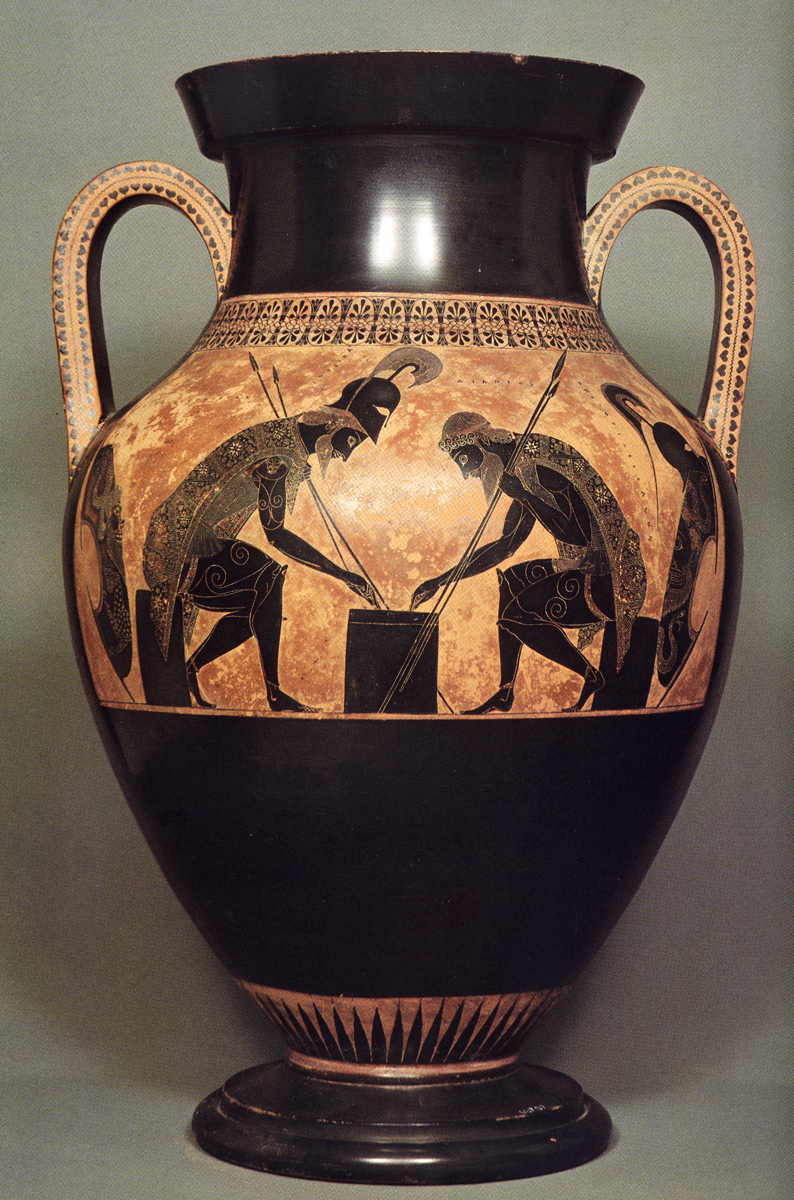
I'll give you another quick example, with the promise of footage from the movie 300 at the end. Greeks often put pictures of warriors on their vases (just like we've all been to the Harry Potter themed birthdays with Harry, Ron, and Hermione's face on everything). The Greeks plastered images of their warriors all over their vases, cups, and bowls. One example is of Achilles and Ajax (another Trojan War Hero) playing a game prior to the siege of Troy. Now enjoy this clip that will hopefully show you the armor and battle style of the Spartans, even if it is a little theatric. Note about the video: it starts out quite loud.
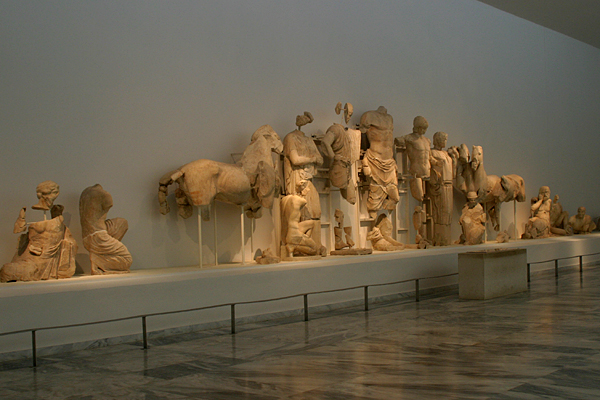
Imagine if I was to put up a series of images on the top of the classroom that showed what would happen to cheaters. The imagery would show a face that all of you would recognize with a cheater, and the punishment branding him forever. That is what the Greeks did at Mount Olympus to ward off cheaters during the Olympic Games. The Temple of Zeus (remember the head god from before?) has a series of statues on the east end of the building that show how Pelops's cheating brings about a curse that causes misfortune for his family and all of his offspring. Pelops cheated in a chariot race with the prize of a beautiful girl to marry named Hippodamia (beautiful name, right? Post in the comments below if you can find out what her name means). The Greeks could recall entire stories about infidelity, cheating, theft, wrong-doing, or even great successes from one simple image.
So on your way out of the blog, don't forget to answer the questions above. And while you're commenting, post what you found to be most interesting about the connection between the Ancient Greeks and our modern civilization.
One last thing, don't forget that there is a poll at the bottom of the blog! (At the moment, the google server doesn't like the fact that I have a poll and just keeps giving me an error message. So if you don't get the poll to show up on your webpage, don't worry about it).